Organizational Management
Sub-Competencies
- Demonstrate an understanding of organizational systems, including structural and cultural dynamics.
- Define and use processes for gathering, analyzing, managing, and using data to plan and make decisions for program evaluation.
- Plan and schedule personal and organizational work, establish procedures to regulate activities and projects, and delegate and empower others at appropriate levels.
- Demonstrate the ability to analyze need and allocate personnel and material resources.
- Develop and manage budgets and maintain accurate fiscal records.
- Demonstrate an understanding of facilities development, planning, and management.
- Understand and use technology as a management tool.
Reflections and Artifacts
Summary: This is the mentorship program handbook, revised for the 2026-2027 school year. This is the guiding handbook for our program and has been intentionally designed to meet the needs of new teachers following the framework of the New Teacher Center (NTC).
Reflection: School leaders must be able to articulate expectations and procedures so that staff understand what is expected of them. While planning our new teacher workshop, I updated our handbook to reflect feedback and changes from the first year of our program revamp. Additionally, in this role, we encountered a contractual challenge with a teacher who was unable to attend one of the back-to-school training days. In that situation, I learned the importance of setting new expectations after an issue is discovered rather than in the moment. In this case, the teacher earned the same stipend for the school year. Using that information, I went back to the handbook and updated it for the following year to prevent future issues.
Explanation: This artifact is part of the annual evaluation system that the PBIS committee uses to both gain funding and determine the progress and status of the PBIS implementation within the building.
Reflection: In managing large systems within a school, a building principal must be able to evaluate the systems in action. This involved working with a student teacher to guide them through conducting the tiered fidelity inventory for the school. Using the information gathered from this survey, I worked with the PBIS committee to set goals for the 2026-2027 school year. Specifically, the data I gained from this survey show that the basic process and understanding are in place at a Tier 1 level, showing that the building is ready to begin Tier 2 supports for students.
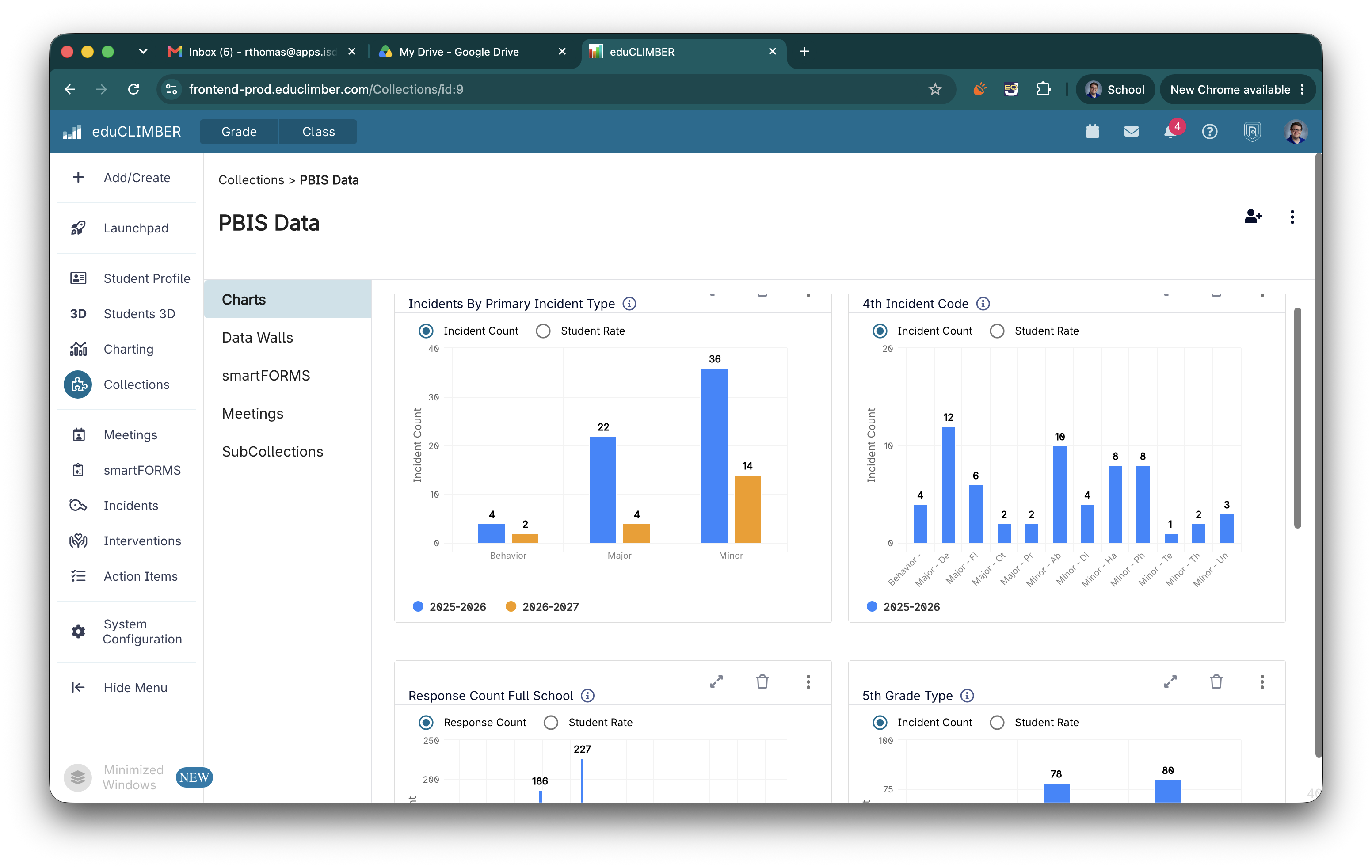
Summary: This artifact is a screenshot of the data warehouse Educlimber that was utilized in the process; the data is able to be anonymized so that student information is not shared with committee members, just the behavioral data in this case.
Reflection: School Principals are responsible for managing the systems of behavior and culture within the building they serve. In this experience, I co-facilitated the back-to-school PBIS team meeting, discussed the new behavior reporting procedures, and led a discussion and analysis using the new data warehouse system. I learned the importance of communicating with stakeholders at various levels when implementing a building-wide decision; what is most convenient for the school leader may not be the best choice for students or staff.