Equity and Culturally Responsive Leadership
Sub-Competencies
- Demonstrate ability to recognize, understand, and respond to cultural and identity issues within the context of educational leadership.
- Demonstrate knowledge of legal and ethical issues in education and the ability to advocate for equitable access to learning opportunities for all students.
- Promote inclusive practices and equitable learning environments that support academic success, belonging, and student well-being.
- Use data and schoolwide systems to reduce disparities and improve outcomes for historically marginalized learners.
- Build trust, relationships, and collaborative systems that honor the voices and experiences of students, families, and staff.
Reflections and Artifacts
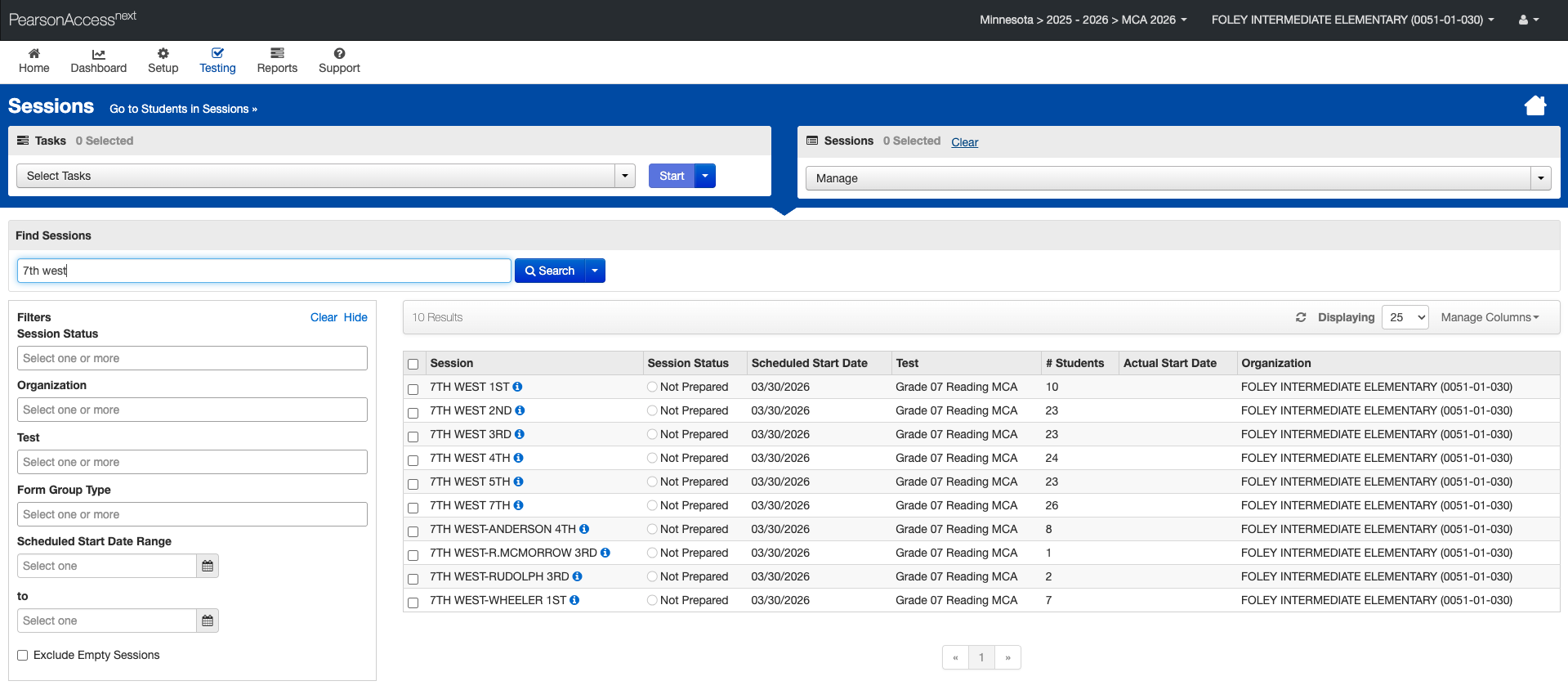
Summary: This artifact represents the work I did overseeing placements and assisting with the MCA testing process in our building.
Reflection: Students should not fail an exam or test due to a disability that they have. As a school leader, ensuring that testing accommodations are followed is both a legal and an ethical requirement. Students deserve every possible chance to succeed. School leaders must be diligent to ensure that the learning environments students are in are the right ones to help each student be successful. Ensuring accommodations are being followed is crucial to that chance. I learned about the importance of following up with various case managers to ensure up-to-date accommodations were entered for each student. This led to the correct placement for students and the correct testing materials to be delivered, ensuring a smooth testing process, building-wide
Summary: This artifact is the schedule of the MDE PBIS summer institute, which took place in August. This event provided professional development for PBIS building leaders on educational research and actionable processes that schools can use to implement PBIS.
Reflection: School leaders must design behavioral systems that allow students to learn and grow, not just punish. This institute provided research showing the positive impacts of implementing PBIS with fidelity within a school system. I learned about the different ways behavior management systems can be designed so that many behaviors can serve as learning opportunities for students with their teacher, rather than an office visit with the building administrator. This experience helped me plan approaches to support students who would be considered tier 2 and 3 within our school systems. I connected with resources to create a vision for the upcoming school year for the PBIS committee I lead.
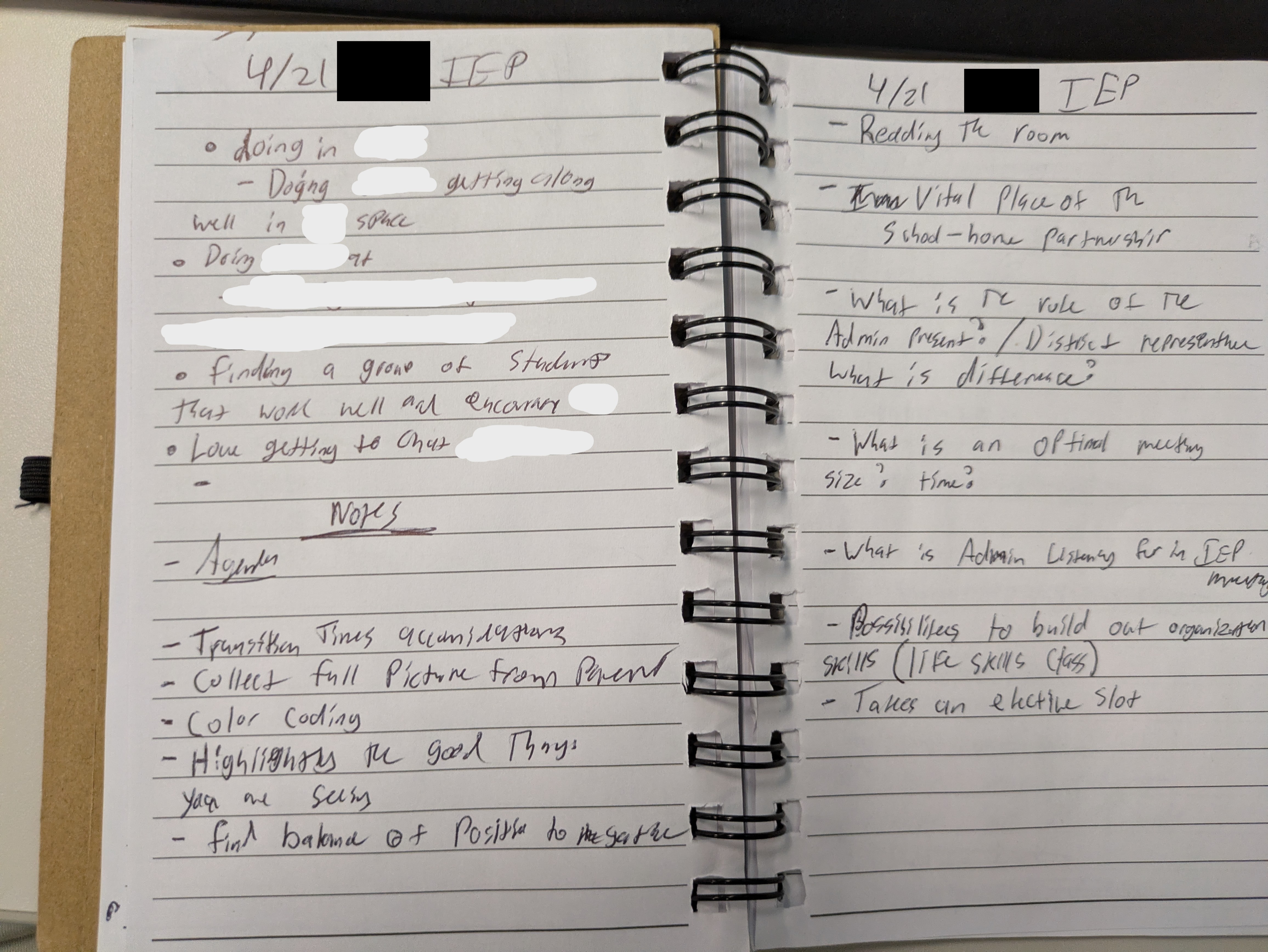
Summary: This artifact is the redacted notes from an IEP meeting I attended. This meeting was helpful in gaining a perspective on the important role of the school-home relationship.
Reflection: School leadership must ensure all students have equitable access to education. Some students require more support than others; as a school leader, part of meeting that obligation is delivering special education programming. In this experience. I attended and participated in an IEP meeting for a student. This meeting was helpful in seeing how important the school-home relationship is for students to be as successful as they can be. In this meeting, I also recognized the importance of maintaining a focus on the student’s learning and meeting their needs to ensure a productive meeting.